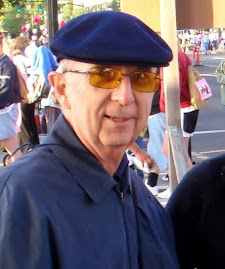
Memory was my drug of choice.
--- Pea Hicks
From Not Quite What I Was Planning, Six-word memoirs by Writers Famous and Obscure.
Tuesday, June 11, 2013
Friday, June 7, 2013
Six-Word Memoirs
Macular degeneration. Didn't see that coming.
--Ian Gould
From Not Quite What I Was Planning, Six-word memoirs by Writers Famous and Obscure.
--Ian Gould
From Not Quite What I Was Planning, Six-word memoirs by Writers Famous and Obscure.
Wednesday, June 5, 2013
Word for the day: hadal
hadal \HEYD-l\, adjective:
1. of or pertaining to the greatest ocean depths, below approximately 20,000 feet (6500 meters).
2. of or pertaining to the biogeographic region of the ocean bottom below the abyssal zone.
Here a once-living being found the hadal current which twists in the waters of all rivers.
-- Lawrence Norfolk, The Shape of a Boar, 2000
By which I mean, if the earth itself were shrunk to the size of a lemon, the black hadal depths of even the Marianas Trench would be shallower than that moist breath of yours gathered on the lemon's skin.
-- Brad Leithauser, The Friends of Freeland, 1997
Hadal entered English in the mid-1900s, and comes from the name Hades, the Greek god of the underworld.
1. of or pertaining to the greatest ocean depths, below approximately 20,000 feet (6500 meters).
2. of or pertaining to the biogeographic region of the ocean bottom below the abyssal zone.
Here a once-living being found the hadal current which twists in the waters of all rivers.
-- Lawrence Norfolk, The Shape of a Boar, 2000
By which I mean, if the earth itself were shrunk to the size of a lemon, the black hadal depths of even the Marianas Trench would be shallower than that moist breath of yours gathered on the lemon's skin.
-- Brad Leithauser, The Friends of Freeland, 1997
Hadal entered English in the mid-1900s, and comes from the name Hades, the Greek god of the underworld.
Tuesday, May 28, 2013
Advice to Myself
Advice to Myself
Louise Erdrich
Leave the dishes.
Let the celery rot in the bottom drawer of the refrigerator
and an earthen scum harden on the kitchen floor.
Leave the black crumbs in the bottom of the toaster.
Throw the cracked bowl out and don't patch the cup.
Don't patch anything. Don't mend. Buy safety pins.
Don't even sew on a button.
Let the wind have its way, then the earth
that invades as dust and then the dead
foaming up in gray rolls underneath the couch.
Talk to them. Tell them they are welcome.
Don't keep all the pieces of the puzzles
or the doll's tiny shoes in pairs, don't worry
who uses whose toothbrush or if anything
matches, at all.
Except one word to another. Or a thought.
Pursue the authentic-decide first
what is authentic,
then go after it with all your heart.
Your heart, that place
you don't even think of cleaning out.
That closet stuffed with savage mementos.
Don't sort the paper clips from screws from saved baby teeth
or worry if we're all eating cereal for dinner
again. Don't answer the telephone, ever,
or weep over anything at all that breaks.
Pink molds will grow within those sealed cartons
in the refrigerator. Accept new forms of life
and talk to the dead
who drift in though the screened windows, who collect
patiently on the tops of food jars and books.
Recycle the mail, don't read it, don't read anything
except what destroys
the insulation between yourself and your experience
or what pulls down or what strikes at or what shatters
this ruse you call necessity.
by Louise Erdrich, from Original Fire: Selected and New Poems. © Harper Collins Publishers, 2003.
Louise Erdrich
Leave the dishes.
Let the celery rot in the bottom drawer of the refrigerator
and an earthen scum harden on the kitchen floor.
Leave the black crumbs in the bottom of the toaster.
Throw the cracked bowl out and don't patch the cup.
Don't patch anything. Don't mend. Buy safety pins.
Don't even sew on a button.
Let the wind have its way, then the earth
that invades as dust and then the dead
foaming up in gray rolls underneath the couch.
Talk to them. Tell them they are welcome.
Don't keep all the pieces of the puzzles
or the doll's tiny shoes in pairs, don't worry
who uses whose toothbrush or if anything
matches, at all.
Except one word to another. Or a thought.
Pursue the authentic-decide first
what is authentic,
then go after it with all your heart.
Your heart, that place
you don't even think of cleaning out.
That closet stuffed with savage mementos.
Don't sort the paper clips from screws from saved baby teeth
or worry if we're all eating cereal for dinner
again. Don't answer the telephone, ever,
or weep over anything at all that breaks.
Pink molds will grow within those sealed cartons
in the refrigerator. Accept new forms of life
and talk to the dead
who drift in though the screened windows, who collect
patiently on the tops of food jars and books.
Recycle the mail, don't read it, don't read anything
except what destroys
the insulation between yourself and your experience
or what pulls down or what strikes at or what shatters
this ruse you call necessity.
by Louise Erdrich, from Original Fire: Selected and New Poems. © Harper Collins Publishers, 2003.
Monday, May 27, 2013
Word for the Day: daedal
dae•dal (deed l)
adj.
1. skillful; ingenious
2. cleverly intricate
3. diversified
4. Finely or skillfully made or employed; artistic
5. A complex set of variations based on a simple folk melody
I was impressed by the computer's daedal circuitry.
[1580–90; < Latin daedalus skillful < Greek]
adj.
1. skillful; ingenious
2. cleverly intricate
3. diversified
4. Finely or skillfully made or employed; artistic
5. A complex set of variations based on a simple folk melody
I was impressed by the computer's daedal circuitry.
[1580–90; < Latin daedalus skillful < Greek]
From Greek mythology: Daedalus, an Athenian inventor who built the labyrinth of Minos; to escape the labyrinth he fashioned wings for himself and his son Icarus
Sunday, May 19, 2013
Amongst the French
Amongst the French
by Paul Zimmer
I do not have their words,
do not have their years or customs.
Passing them on the road,
shy as fog passing down
slopes into the valley,
I always give first utterance
or make an uncertain gesture.
My neighbors are kind,
knowing I am like rain,
that if they wait long enough,
in time I will go away.
It is the same for me in
all directions—under stars
swarming out of foothills,
on the gravel I churn
with my shoes—east, west,
north, or south—the same.
If I remained in
this friendly place forever,
I would always be a stranger.
"Amongst the French" by Paul Zimmer, from Crossing to Sunlight Revisited. © The University of Georgia Press, 2007
Friday, May 3, 2013
Smoke
Smoke
by Faith Shearin
It was everywhere in my childhood: in restaurants,
on buses or planes. The teacher's lounge looked like
London under fog. My grandmother never stopped
smoking, and walking in her house was like diving
in a dark pond. Adults were dimly lit: they carried
matches in their pockets as if they might need fire
to see. Cigarette machines inhaled quarters and
exhaled rectangles. Women had their own brands,
long and thin; one was named Eve and it was meant
to be smoked in a garden thick with summer flowers.
I'm speaking of moods: an old country store where
my grandfather met friends and everyone spoke
behind a veil of smoke. (My Uncle Bill preferred
fragrant cigars; I can still smell his postal jacket ...)
He had time to tell stories because he took breaks
and there was something to do with his hands.
My mother's bridge club gathered around tables
with ashtrays and secrets which are best revealed
beside fire. Even the fireplaces are gone: inefficient
and messy. We are healthier now and safer! We have
exercise and tests for breast or colon cancer. We have
helmets and car seats and smokeless coffee shops
where coffee has grown frothy and complex. The old
movies are so full of smoke that actors are hard to see
and they are often wrapped in smoking jackets, bent
over a piano or kiss. I miss the places smoke created.
I like the way people sat down for rest or pleasure
and spoke to other people, not phones, and the tiny fire
which is crimson and primitive and warm. How long
ago when humans found this spark of warmth and made
their first circle? What about smoke as words? Or the
pipes of peace? In grade school we learned how it rises
and how it can kill. We were taught to shove towels
under our closed doors: to stop, drop, and roll. We had
a plan to meet our family in the yard, the house behind
us alive with all we cannot put out...
"Smoke" by Faith Shearin, from The Empty House. © Word Press, 2008
Subscribe to:
Posts (Atom)