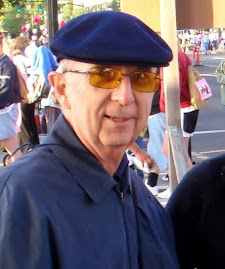
Negative Space by Ron Koertge
My dad taught me to pack: lay out everything. Put back half. Roll things that roll. Wrinkle-prone things on top of cotton things. Then pants, waist- to-hem. Nooks and crannies for socks. Belts around the sides like snakes. Plastic over that. Add shoes. Wear heavy stuff on the plane. We started when I was little. I'd roll up socks. Then he'd pretend to put me in the suitcase, and we'd laugh. Some guys bond with their dads shooting hoops or talking about Chevrolets. We did it over luggage. By the time I was twelve, if he was busy, I'd pack for him. Mom tried but didn't have the knack. He'd get somewhere, open his suitcase and text me—"Perfect." That one word from him meant a lot. The funeral was terrible—him laid out in that big carton and me crying and thinking, Look at all that wasted space.
"Negative Space" by Ron Koertge, from Sex World. © Red Hen Press, 2014. Reprinted with permission. (buy now)
Friday, October 10, 2014
Wednesday, September 17, 2014
Grandchildren
Grandchildren
by Olivia Stiffler
They disappear with friends
near age 11. We lose them
to baseball and tennis, garage
bands, slumber parties, stages
where they rehearse for the future,
ripen in a tangle of love knots.
With our artificial knees and hips
we move into the back seats
of their lives, obscure as dust
behind our wrinkles, and sigh
as we add the loss of them
to our growing list of the missing.
Sometimes they come back,
carting memories of sugar cookies
and sandy beaches, memories of how
we sided with them in their wars
with parents, sided with them
even as they slid out of our laps
into the arms of others.
Sometimes they come back
and hold onto our hands
as if they were the thin strings
of helium balloons
about to drift off.
"Grandchildren" by Olivia Stiffler, from Otherwise, We Are Safe. © Dos Madres Press, 2013.
by Olivia Stiffler
They disappear with friends
near age 11. We lose them
to baseball and tennis, garage
bands, slumber parties, stages
where they rehearse for the future,
ripen in a tangle of love knots.
With our artificial knees and hips
we move into the back seats
of their lives, obscure as dust
behind our wrinkles, and sigh
as we add the loss of them
to our growing list of the missing.
Sometimes they come back,
carting memories of sugar cookies
and sandy beaches, memories of how
we sided with them in their wars
with parents, sided with them
even as they slid out of our laps
into the arms of others.
Sometimes they come back
and hold onto our hands
as if they were the thin strings
of helium balloons
about to drift off.
"Grandchildren" by Olivia Stiffler, from Otherwise, We Are Safe. © Dos Madres Press, 2013.
Wednesday, September 10, 2014
Japanese Maple
Japanese Maple
By Clive James
Your death, near now, is of an easy sort.
So slow a fading out brings no real pain.
Breath growing short
Is just uncomfortable. You feel the drain
Of energy, but thought and sight remain:
Enhanced, in fact. When did you ever see
So much sweet beauty as when fine rain falls
On that small tree
And saturates your brick back garden walls,
So many Amber Rooms and mirror halls?
Ever more lavish as the dusk descends
This glistening illuminates the air.
It never ends.
Whenever the rain comes it will be there,
Beyond my time, but now I take my share.
My daughter’s choice, the maple tree is new.
Come autumn and its leaves will turn to flame.
What I must do
Is live to see that. That will end the game
For me, though life continues all the same:
Filling the double doors to bathe my eyes,
A final flood of colors will live on
As my mind dies,
Burned by my vision of a world that shone
So brightly at the last, and then was gone.
By Clive James
Your death, near now, is of an easy sort.
So slow a fading out brings no real pain.
Breath growing short
Is just uncomfortable. You feel the drain
Of energy, but thought and sight remain:
Enhanced, in fact. When did you ever see
So much sweet beauty as when fine rain falls
On that small tree
And saturates your brick back garden walls,
So many Amber Rooms and mirror halls?
Ever more lavish as the dusk descends
This glistening illuminates the air.
It never ends.
Whenever the rain comes it will be there,
Beyond my time, but now I take my share.
My daughter’s choice, the maple tree is new.
Come autumn and its leaves will turn to flame.
What I must do
Is live to see that. That will end the game
For me, though life continues all the same:
Filling the double doors to bathe my eyes,
A final flood of colors will live on
As my mind dies,
Burned by my vision of a world that shone
So brightly at the last, and then was gone.
Tuesday, September 9, 2014
Men Are Like Rivers
One of the most widespread superstitions is that every man has his own special, definite qualities; that a man is kind, cruel, wise, stupid, energetic, apathetic, etc. Men are not like that . . . Men are like rivers; the water is the same in each, and alike in all; but every river is narrow here, is more rapid there, here slower, there broader, now clear, now cold, now dull, now warm. It is the same with men. Every man carries in himself the germs of every human quality and sometimes one manifests itself, sometimes another, and the man often becomes unlike himself—while still remaining the same man.
Leo Tolstoy, "Resurrection," Book I, Chapter LIX. Nekhludoff`s Third Interview With Maslova In Prison
Friday, April 11, 2014
Where I'm From
Where I’m From
By Ryan Saulter
I am from the disc golf,
from medals and Blazer posters.
I am from fresh air
(hanging out with Dad,
it tastes like cheese burgers.)
I am from the brown owl,
the bench in the backyard
where I can watch the sky
and breathe.
where I can watch the sky
and breathe.
I am from
reading Dr. Seuss,
the Rose Garden,
the Rose Garden,
from Cousin Bobby and Aunt Marilyn.
I'm from
football
and movies,
and movies,
from bad words, and I don't like Beaverton.
I'm from being safe
and doing the right thing.
I'm from California and McGuire Park,
Bacon cheeseburgers and
mac n cheese.
From Chicago
and my Aunt's awesome pancakes.
In the closet,
a box of baseball cards
that remind me of being young.
I am from
rain showers
friends, games,
and feeling safe.
friends, games,
and feeling safe.
Monday, February 10, 2014
Word for the Day: Bosky
bosky \BOS-kee\, adjective:
1. covered with bushes, shrubs, and small trees; woody.
2. shady.
It was cradled in the bosky foothills of the coastal ranges.
-- Cecilia Dart-Thornton, The Well of Tears, 2005
It stood in a hollow of a bosky park, crowded to a degree that surprised and even displeased me, with huge timber and dense shrubberies of laurel and rhododendron.
-- Robert Louis Stevenson, South Sea Tales, 1893
Bosky comes from the Middle English word bosk which referred to a bush.
1. covered with bushes, shrubs, and small trees; woody.
2. shady.
It was cradled in the bosky foothills of the coastal ranges.
-- Cecilia Dart-Thornton, The Well of Tears, 2005
It stood in a hollow of a bosky park, crowded to a degree that surprised and even displeased me, with huge timber and dense shrubberies of laurel and rhododendron.
-- Robert Louis Stevenson, South Sea Tales, 1893
Bosky comes from the Middle English word bosk which referred to a bush.
Musing on a Frozen lake
Gratitude to Old Teachers
by Robert Bly
When we stride or stroll across the frozen lake,
We place our feet where they have never been.
We walk upon the unwalked. But we are uneasy.
Who is down there but our old teachers?
Water that once could take no human weight—
We were students then—holds up our feet,
And goes on ahead of us for a mile.
Beneath us the teachers, and around us the stillness.
"Gratitude to Old Teachers" by Robert Bly, from Eating the Honey of Words. © Harper Collins, 1999.
by Robert Bly
When we stride or stroll across the frozen lake,
We place our feet where they have never been.
We walk upon the unwalked. But we are uneasy.
Who is down there but our old teachers?
Water that once could take no human weight—
We were students then—holds up our feet,
And goes on ahead of us for a mile.
Beneath us the teachers, and around us the stillness.
"Gratitude to Old Teachers" by Robert Bly, from Eating the Honey of Words. © Harper Collins, 1999.
Subscribe to:
Posts (Atom)