Wednesday, April 21, 2010

A Mouse's Plea

clipped from www.npr.org

Early Animal Rights Poem Discovered: A Mouse's Plea


April 21, 2010

He was just an ordinary mouse, nothing special. He lived, very briefly, 237 years ago, in the laboratory of a great chemist, Joseph Priestley. Here he sits, in his cage.


There were lots of mice in Priestley's lab. He had made his reputation as one of the first scientists to identify oxygen. He studied mice to figure out what happens inside animals as they breathe. This meant he regularly opened them to examine lungs, veins, arteries, to see that blood changed color when it moved through lungs. And since tuberculosis -- or "consumption" -- was the scourge of that era, lung research seemed like a valuable thing to do.


But animals didn't last long in Priestley's lab, especially mice. So many died that his lab assistant, a young woman named Anna Barbauld, decided that Priestley should give his lab animals a little more respect. It was, after all, 1773, just a few years before Lexington, Concord and the Declaration of Independence. On both sides of the Atlantic, "inalienable rights" were a rallying cry, and Anna, a young wife and poet, decided to write a protest poem. She called it "The Mouse's Petition to Dr. Priestley, Found in the Trap where he had been Confined all Night."


"There's this extraordinary moment," says historian Richard Holmes. It's 1773. "Priestley packs up for the day, and he leaves that next mouse in a cage on his desk for the next morning. He will put it [in a breathing tank] and remove the oxygen, and the mouse will almost certainly die. And Anna Barbauld, who's cleaning up, she just looks at the mouse, and she thinks, wait a minute, wait a minute ... and she sits down and writes a poem."


Holmes says Anna folded what she wrote into a square, jammed it between the bars of the mouse's cage, and left it for Priestley.


It is a poem, he says in a footnote in his prize-winning book The Age of Wonder, in which "a freeborn mouse, cruelly imprisoned in its laboratory cage, appeals for its right to life." It is written from the mouse's point of view.


This is, says Holmes, "perhaps the first animal-rights manifesto ever written."


The question, of course, is what happened next? Do we know if Priestley read the poem? Do we have any idea if he spared the mouse? Holmes says it's "terribly frustrating for a biographer," but there is no evidence, no mention of the mouse anywhere that he can find. This mouse may one day become a poster mouse for animal rights, being the first little mammal to be celebrated in this way. But its fate, alas, is unknown.


Special thanks to Benjamin Arthur for imagining Anna Barbauld's mouse in watercolor, and to actress Anne Bobby for her performance (including her outburst in our studio -- you can hear her losing it on our radio story, and her obviously broken heart is on display; just hit the "listen" button). Richard Holmes' book is called
The Age of Wonder. It won the Critics Circle Award for Best Nonfiction 2009.

Tuesday, April 20, 2010

Doug Slama Runs in the Boston Marathon

Doug finished the marathon yesterday -- a 3:15:17 run.

Cancer fight takes man to Boston Marathon

By Gary Horowitz • Statesman Journal • April 17, 2010


Doug Slama of Salem will be running in the Boston Marathon in part to raise money for the Melanoma Foundation of New England. He was diagnosed with stage three metastatic malignant melanoma in October 2009.


Doug Slama of Salem will be running in the Boston Marathon in part to raise money for the Melanoma Foundation of New England. He was diagnosed with stage three metastatic malignant melanoma in October 2009. (Kobbi R. Blair | Statesman Journal)
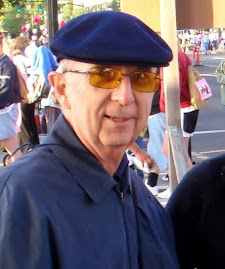


After completing his first Boston Marathon last year, Doug Slama had no great desire to challenge himself again in the world's oldest annual marathon.


At least not right away.


But that sentiment changed in October, when Slama was diagnosed with stage three metastatic malignant melanoma.


"I'd say the main reason I'm going again is I wanted to prove myself again," said Slama, 45, a Salem-based veterinarian who lives with his wife, Leilani, and their children, son, Tim, 13, and daughter, Ellie, 11.


Malignant melanoma is the most deadly form of skin cancer and if detected in the early stages, can usually be treated successfully. Unfortunately, Slama is not in that category.


About a week before the 2009 Portland Marathon in October, Leilani discovered a lump on Doug's left shoulder. There was reason for concern after an initial chest X-ray, and two days after the marathon a biopsy of the tumor resulted in bad news.


Slama said that about 50 percent of people with stage three malignant melanoma die within the first two years, and "it's not a cancer that you get a five-year cure."


If anything, the diagnosis made Slama even more determined to run in Monday's 114th edition of the Boston Marathon. The South Salem High and Oregon State graduate has been running 60 miles per week in preparation for the event.


"The running's one of the ways that keeps me centered," Slama said. "I get out there at 5 in the morning with my running friends and we solve all the problems in the world, and in the meantime we get our 10 or 12 miles in and then we're done for the day and I just go on with my life as normal."


But life has changed.


In December, Slama began a two-year experimental vaccine trial at Providence Cancer Center in Portland that is designed to stimulate his immune system. So far, so good. Subsequent scans have not revealed tumors.


The most difficult part was telling the kids.


But they've responded in positive fashion, accompanying dad on several of his treatments. The family left Thursday for Boston.


"It's awesome. It really is," Tim, a seventh-grader at Leslie Middle School, said of the Boston trip. (Dad's) great."


Slama doesn't always feel great. Treatments leave Slama with flu-like symptoms for a few days. But it hasn't stop him from training.


Most of Slama's runs include treks around Minto-Brown Island Park, Bush's Pasture Park and his South Salem neighborhood with Mike Studer, a long-time triathlete who will be competing in his first Boston Marathon.


Studer, 40, a Salem-based physical therapist, has been running with Slama for the past 2Œ years. He calls Slama "an inspiration."


"If every patient I had was like Doug Slama, I pretty much would be known world-wide because my job would be that much easier," Studer said. "He's positive. He accepts what he's going through, but he's not letting it beat him."


Part of Slama's motivation for this year's Boston Marathon stems from an opportunity to increase awareness about melanoma, with an emphasis on prevention.


Slama is raising money for The Melanoma Foundation of New England and is on a team called "running for cover."


For information or to make a donation, go to www.firstgiving.com/dougslama. Checks can be made out to Melanoma Foundation of New England and sent to Animal Care Center Veterinary Clinic, c/o Doug Slama, 5498 Commercial St SE, Salem, OR 97306.


Ellie asked her dad recently if he planned to compete in any more marathons. Doug's response: "I don't know, this could be my last one," left her uneasy. He reassured Ellie that it wasn't because of the cancer.


All the road work through the years has taken a toll and Slama has "bad hips right now from all the miles." Besides, there might be other goals to pursue.


"I could do a triathlon instead. I could do a lot of things," Slama said. "But this (marathon's) a special one."


GALLAGHER FITNESS RESOURCES


Several area athletes who are competing in the Boston Marathon credit Gallagher Fitness Resources in Salem for much of their success.


Every Saturday morning, rain or shine, a group congregates in front of the store to go on a run.


"I personally would not sustain marathon training for seven straight years without the support and social aspect of running with a group," said Keizer's Deb Lush, 33, who ran her first Boston Marathon last year and is back again.


"I think that's probably true for all of us."


Salem's Chane Griggs, 55, who will be competing in her second Boston marathon, concurs.


"There's nothing like the power of a group," Griggs said. "Even on those rainy days, there's nothing like that accountability."


In addition to Lush and Griggs, other Salem-area athletes at this year's Boston Marathon who are affiliated with Gallagher Fitness Resources include Bob Boyle, James Boyle, Charlotte Hartwig, Dan Meireis and Sue Spinney.


THE LURE OF BOSTON


For Marty Silbernagel of Salem, there were no plans for a fourth Boston Marathon after running last year. But after posting a qualifying time for Boston in the Portland Marathon, Silbernagel reconsidered.


He hasn't had any serious injuries but doesn't want to tempt fate at age 45. As long as he's healthy enough to compete, Silbernagel figured he should be in Boston again.


"I just don't know how long my luck will be," Silbernagel said. "I can definitely sense that over the years, I've worn down a little bit."


But there's just something magical about the Boston Marathon.


"Most (marathon) courses the last quarter mile people are cheering," Lush said. "At Boston, it's like that for the last 10 miles."

Monday, April 19, 2010

Quote of the day

"I generally avoid temptation unless I can't resist it."


Saturday, April 17, 2010

What's blooming in St. Louis

Photo by Don Sessions taken in his garden.


Click images to enlarge.


Photo by Jan Sessions on her iPhone takin in Des Peres, MO.


Friday, April 16, 2010

Word of the Day

oneiric


\oh-NY-rik\ , noun;

1. Of, pertaining to, or suggestive of dreams; dreamy.


Quotes:

On this score, the novel might easily drift off into an oneiric never-never land, but Mr. Welch doesn't let this happen.

-- Peter Wild, "Visions of Blackfoot", New York Times, November 2, 1986

Her large images, which are cloaked in an elegant oneiric mist, transport the viewer to an ideal world where bodies seem to have become weightless ghosts of themselves.

-- Simona Vendrame, "Nature and the solitary self, translated by Jacqueline Smith", Temaceleste

Some -- not all -- of Caravaggio's painting uniquely compels you to grope for words in order to describe the optical novelty and disturbing immediacy of the images. They're at once coldly precise, voluptuously real and strangely oneiric.

-- Peter Robb, "Candid camera", The Guardian, October 20, 2001

Origin:Oneiric comes from Greek oneiros, "dream."


Sunday, April 11, 2010

Bobby McFerrin

clipped from www.npr.org
Bobby McFerrin's Improv-Inspired 'Vocabularies'


April 11, 2010
To Listen to the Story: Click Here

Bobby McFerrin's name has been part of the world-music lexicon for more than two decades. His infectious, hummable 1988 mega-hit "Don't Worry Be Happy" ended McFerrin's musical life as he had known it — at least for a while. He skyrocketed to fame and couldn't seem to hide from the song that brought him mainstream success. But he followed his heart and dug deeper, seeking broader possibilities for music, whether on stage or in a recording studio.


Bobby McFerrin


On any given night, McFerrin can be found delicately walking a tightrope of vocal improvisation, carrying nothing more than his four-octave vocal range and his childlike sense of play. Next month, he'll sing and conduct an orchestra in Italy. It's not a big stretch for the vocalist, who spent time doing similar work as creative chair of the St. Paul Chamber Orchestra.


Born From Improvisation


McFerrin's projects have varied from singing daring duets with pianist Chick Corea to breathing new life into classical treasures with cellist Yo-Yo Ma to finding inspiration through his well-honed singing ensemble, Voicestra. Now, he's released his first album in eight years, called Vocabularies.


The album was born out of requests by choir directors and choral organizations to make the arrangements for McFerrin's pieces available to them. Roger Treece, McFerrin's arranger and collaborator, drew upon recordings of McFerrin with the Voicestra to write new material for Vocabularies. In arranging songs for the album, Treece listened to hundreds of McFerrin's improvisations.


"I was the well he drew from," McFerrin says.


Though McFerrin says he prefers the art of improvisation, he records to document where he is at the moment, musically speaking.


A Family Of Singers


McFerrin's father, the late Robert McFerrin, was the first African-American soloist in the Metropolitan Opera. He sang the part of Porgy in the film version of Porgy and Bess, with Sidney Poitier. His sister and mother also sang, and McFerrin says that might be why it took him so long to realize he was a singer. He wanted to be different.


"I always had a nagging suspicion that I wasn't a pianist," he says.


McFerrin didn't realize he was a singer until he was 27, and he says he hasn't looked back since.


"My whole goal this whole time was to be a working musician," he says. "It wasn't about being famous or being a celebrity. It's just work."


But for McFerrin, it's also play.


"When we're doing our lessons, the teacher doesn't say, 'Ready, set, work,' " he says. "They say, 'Ready, set, play,' and I always took that word seriously."


Thursday, April 8, 2010

Oral Alphabet

Have you ever been at a loss for a name to put with a letter when you're spelling over the phone? Here's a reminder of the original oral alphabet.

ALPHA
BRAVO

CHARLIE
DELTA

ECHO


FOXTROT

GOLF

HOTEL

INDIA

JULIET

KAPPA

LIMA

MIKE

NOVEMBER

OSCAR

PAPA

QUEBEC

ROMEO

SIERRA

TANGO

UNIFORM

VICTOR

WHISKEY

XRAY
YANKEE

ZULU

Test yourself